Poslito - A hiring app that keeps looking while people still have a job

Poslito matches workers with employers for an employment agency. Workers say what they want and the app keeps looking for them, employers post ads the agency approves, and the live app got stronger without a rewrite.

  • Recruitment and staffing
  • Live in the App Store and on Google Play
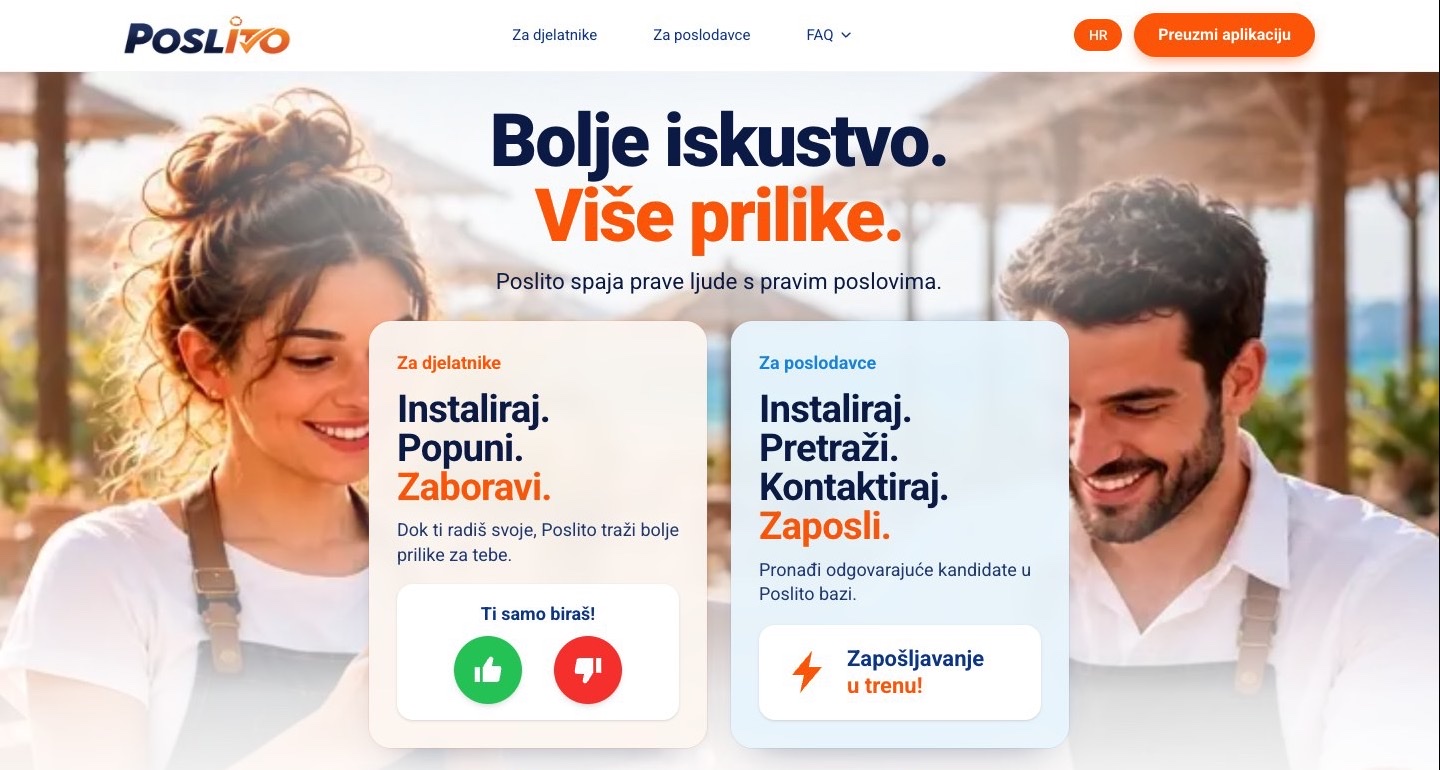
The Poslito website: one card for workers and one for employers, over a photo of two people in a seaside cafe

The agency's matching, in one app

Poslito is an employment agency's app. Workers say what job, place and pay they want, and the app keeps looking for them, even while they still have a job. Employers post an ad or search the candidates, and the agency approves what gets published.

The situation

The agency wanted its matching in one app, for workers and employers alike, with its own team deciding what goes out. People who already have a job don't browse job boards, so the app has to do the looking while they work.

It went live in the App Store and on Google Play in February 2026, and on Huawei devices too.

  • 1,227server tests, all passing
  • 123API endpoints
  • 3app stores: Apple, Google, Huawei
  • ~40screens in the phone app

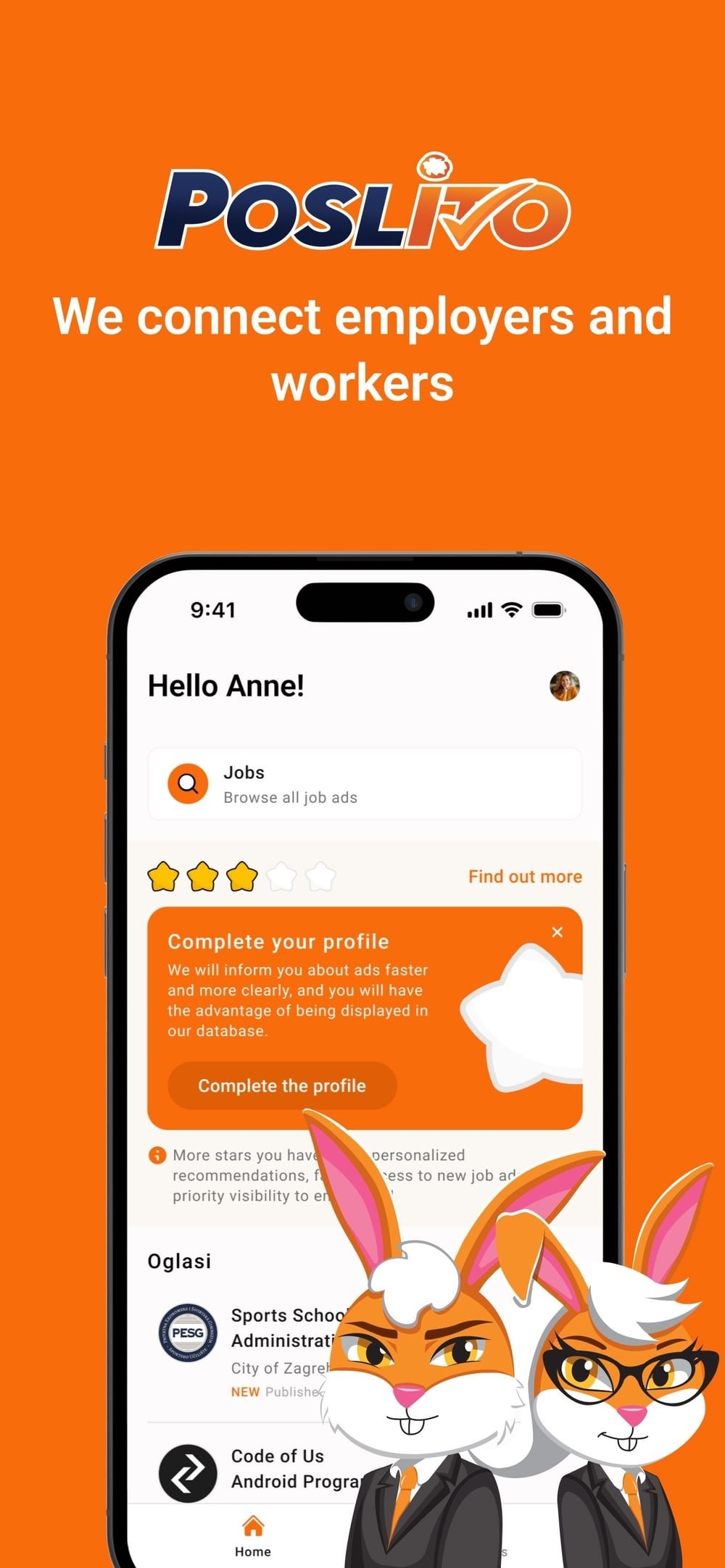
The app, as the store shows it

For workers:

  1. Sign up with an SMS code, Google or Apple.
  2. Fill in the profile: the job, place and pay they want, experience and a CV.
  3. Set a personal filter, then forget about it. Matching ads arrive as notifications.
  4. Say yes or no to an ad with one tap, and talk to the employer in the app's chat.

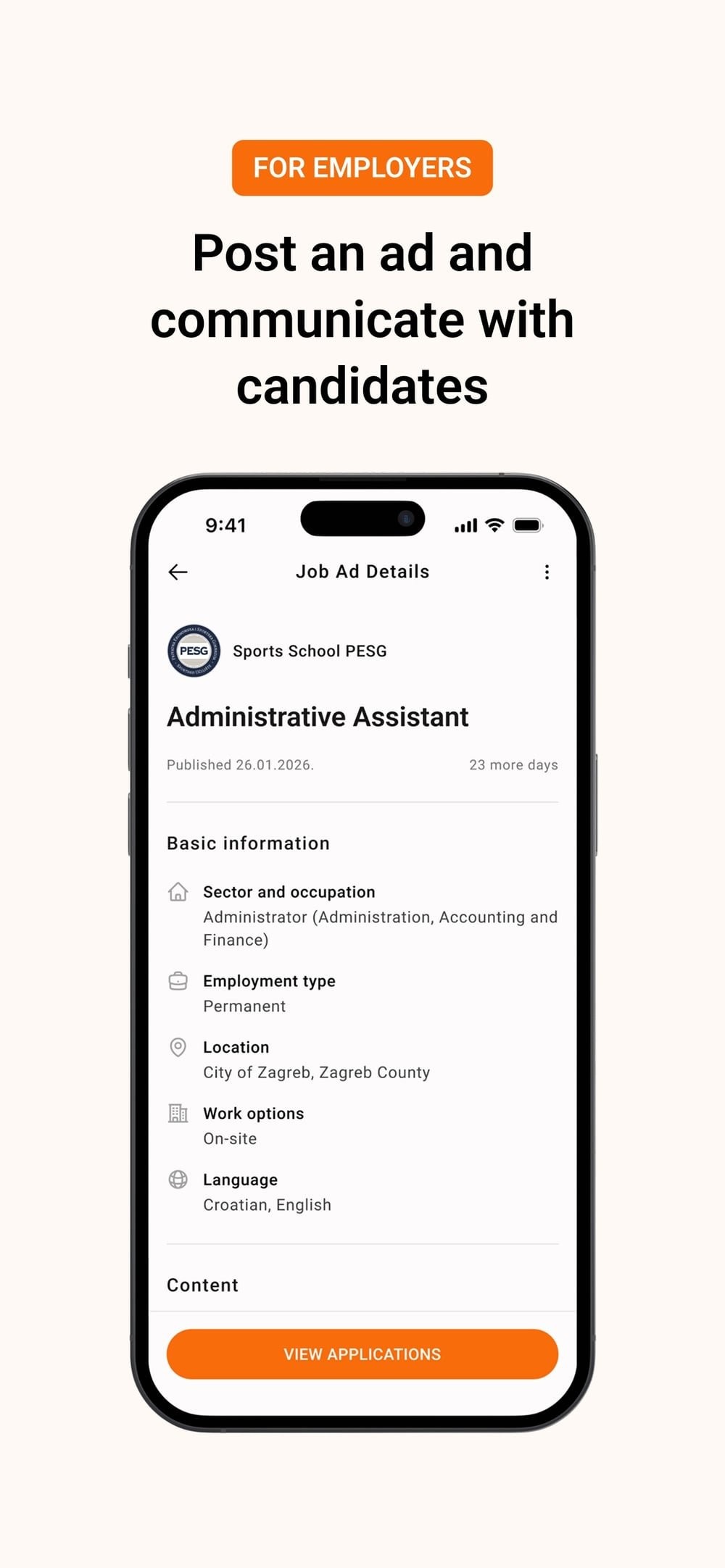
These are the store's own images, with demo data.

Poslito's App Store image of a worker's home screen: a greeting, three of five stars, a prompt to complete the profile and the latest ads.Poslito's App Store image of a job ad's details on the employer side: the job, type, place, work options, language and a button to view applications.

Reward complete profiles

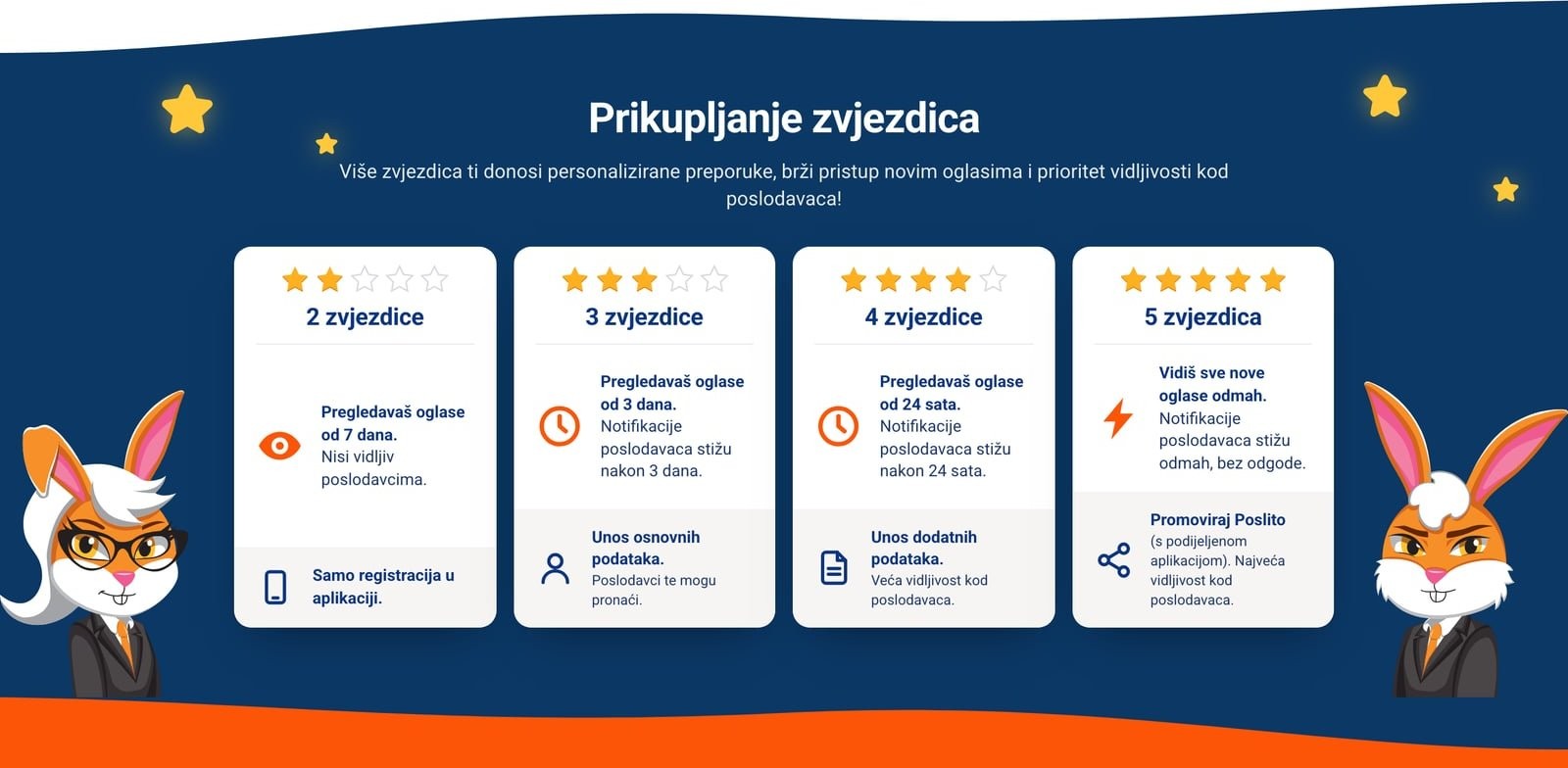
Workers earn stars, from two to five, by filling in their profile and inviting others. More stars mean they see new ads sooner, from a week's delay down to the moment an ad is published, and employers can find them in a search.

The Poslito workers page explaining the star levels: with 2 stars a worker sees new ads after 7 days, with 3 after 3 days, with 4 after 24 hours and with 5 at once.

Two ways to hire, and a third

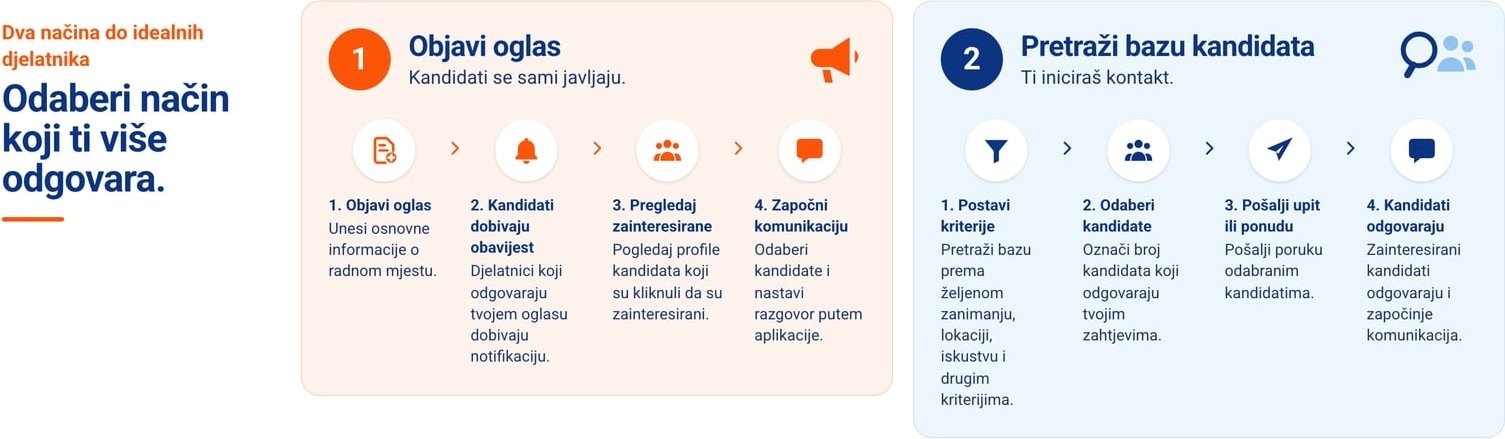
An employer posts an ad, and once the agency approves it, matching workers get a notification. Or the employer searches the candidates by profession, place and experience and messages the right ones. If they'd rather do neither, one button asks the agency to do the hiring.

The Poslito employers page with two ways to hire: post an ad and let candidates come to you, or search the candidates and contact them yourself, each in four steps.

For the agency

Every ad approved

An ad goes live only after the agency's team approves it, and it expires after 30 days unless repeated.

One admin panel

The team approves ads, blocks and unblocks users, and keeps the lists of cities, professions, skills and languages.

No release needed

A change to those lists shows up in every app at once.

Why it was hard

Three sides use it: workers, employers and the agency. Every sign-up sends a paid SMS code. And once the app was in the stores with real users, it had to get stronger without starting over.

Where it stands

Live in three app stores since February 2026, with a new website since October 2026. Workers manage their own phone number, password and account, including deleting it.

For the technical reader

A live app that got stronger without a restart

A change on the server reaches everyone at once. A change in the app only arrives when people update. Every decision here starts from that.

Phone appsFlutter: iPhone, Android and Huawei
ServerSpring Boot and PostgreSQL: matching, chat, approvals
Sign-upSMS codes, Google and Apple
NotificationsPush for new ads and messages
Admin panelNext.js: ads, users and lists
WebsiteNext.js, for workers and employers
Flutter for the phone apps, Java and Spring Boot with PostgreSQL on AWS, Next.js for the website and the admin panel.

Three hard problems

Old apps must keep working

The problem

Some people never update their apps. A server change that an old app doesn't understand would break it for them overnight.

What we decided
Each server change ships in an order that lets the app learn it first. A minimum-version check asks people to update only when an old app would break.
What it cost us
Releases take longer and come in stages.

Every sign-up costs money

The problem

Each SMS code is paid for. Without limits, a script trying numbers could run up the agency's bill.

What we decided
Sign-up codes are limited per account and per address, and only go to the countries the agency works in.
What it cost us
A real person who mistypes their number too often has to wait before trying again.

Stronger, without starting over

The problem

The app was live with real users, who needed it to keep working while it improved.

What we decided
After outside testing and a security review in October 2026, the client chose to harden the live app instead of rewriting it, with no new libraries on the server.
What it cost us
More of our own code to maintain, and no restart for the people already using it.

A month of hardening

In October 2026 an outside tester worked through the app in rounds, each one a retest of the fixes before, and a security review looked at the server. Every server change was ordered so the apps people already had installed kept working.

By the end of the month the server had 1,227 automated tests, all passing on November 16, 2026, and the phone apps, which had no automated tests before October, had their first 66.

A year in four steps

  1. Autumn 2025

    The build starts: the phone apps, the server and the admin panel.

  2. February 2026

    The app goes live in the App Store and on Google Play.

  3. Spring 2026

    The app gets its new name, Poslito.

  4. October 2026

    Outside testing, a security review and a month of hardening, then a new website.

How we check it

1,227 server tests and 66 phone app tests, plus several rounds of outside testing in October 2026, each one a retest of the fixes before.

What the agents do, and what people do

Four engineers built it over the year. In October 2026 AI agents joined the work: they wrote part of the fixes and the tests, and a person reviewed every change.

What this means for your process

Your process probably has the same two needs: nothing goes out before the right person approves it, and a system people already use can't stop while it gets better.

The First Workflow starts with one process like that. You get a working version to try, with the approvals where your team needs them.

Have a process like this?

Book a 20-minute call

You describe the process. If a First Workflow fits, you get a one-page proposal within 2 working days. If it doesn't, we say so.

Book a call

You'll talk to Sandi, our founder. No slides.

Not ready for a call? Send us the process in writing. We reply within one working day.

Free download

The First Workflow kit: find the process worth turning into software

Ten signs a process is ready, what AI can do in a back office today, a worksheet to price your process, build or buy and the questions to ask any software vendor. Seven pages, written for people who run operations.

Want our eyes on your process? Get a free scorecard
We use your email for this and, if you tick the box, the Letter. Unsubscribe with one click. See our privacy policy.
Book a 20-minute call